Socket Weld Fittings About
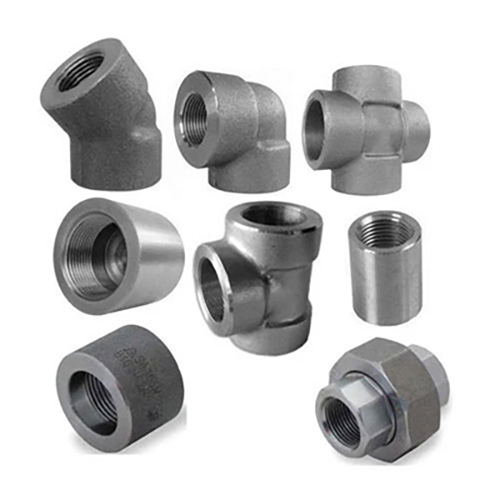
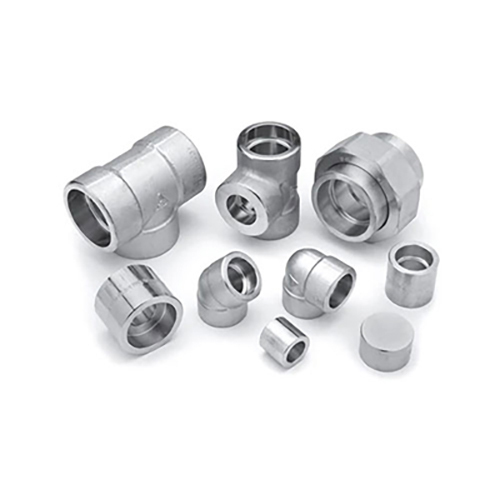
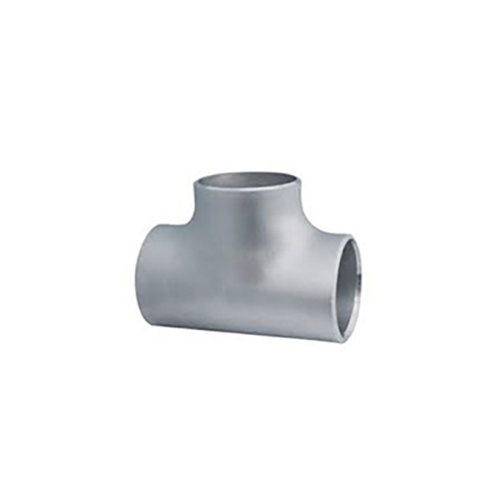
- A Socket Weld Fittings is a pipe attachment detail in which a pipe is inserted into a recessed area of a Valve, fitting or flange.
- Socket Weld Fittings are mainly used for small pipe diameters (Small Bore Piping); generally for piping whose nominal diameter is NPS 2 or smaller.
- They are used for lines conveying flammable, toxic or expensive material where no leakage can be permitted, and for steam 300 to 600 PSI.
- They are produced to several ASTM standards and are manufactured in accordance with ASME B16.11. The B16.11 standard covers pressure-temperature ratings, dimensions, tolerances, marking, and material requirements for forged carbon and alloy steel.
Socket Weld Pipe Fittings Manufacturing Standards
- ASTM A182 -ASME SA182 Standard Specification for Wrought Austenitic Stainless Steel Piping Fittings
- ASME B16.9 Factory-Made Wrought Buttwelding Fittings
- ASME B16.11 Forged Fittings, Socket - Welding and Threaded
- MSS SP-43Wrought and Fabricated Butt-Welding Fittings for Low Pressure, Corrosion Resistant Applications
- MSS SP-95 Swage(d) Nipples and Bull Plugs
- BS3799 Specification for Steel pipe fittings, screwed and Socket-welding for the petroleum industry
Precision Manufacturing and Quality AssuranceEvery Socket Weld Fitting undergoes a stringent forging process, ensuring mechanical integrity and durability. Hydrostatic testing is performed up to 1.5 times the design pressure, confirming leak-free performance even in demanding conditions. Each fitting is meticulously marked with size, grade, heat number, and relevant standards to maintain traceability and adherence to quality norms.
Versatile Materials and Reliable PerformanceAvailable in a range of material grades such as ASTM A105, F304/L, F316/L, F11, and F22, these fittings deliver optimal performance in corrosive and high-stress environments. With a broad range of dimensions, thicknesses (Sch 10s to Sch 160), and rated pressure classes (2000LBS to 9000LBS), they are built to handle the rigors of oil & gas, petrochemical, and power industries.
Ease of Installation and Secure ConnectionsSocket weld fittings provide a rigid, metal-to-metal seal, making them ideal for critical pipe connections. The beveled or square-cut end preparation allows for precise welding, and their standardized design ensures compatibility with existing systems. Packaged securely in wooden cases or pallets, they are transported safely across global markets.
FAQ's of Socket Weld Fittings:
Q: What manufacturing process is used for these Socket Weld Fittings?
A: These Socket Weld Fittings are manufactured using a forging process that imparts superior strength and structural reliability, suitable for high-pressure and high-temperature industrial applications.
Q: How are the fittings tested to ensure safety and performance?
A: Every fitting undergoes hydrostatic testing at up to 1.5 times the design pressure to confirm leak-proof integrity before dispatch, ensuring they meet stringent industry safety standards.
Q: Where can Socket Weld Fittings be used?
A: Socket Weld Fittings are widely employed in oil & gas, petrochemical, power plants, and water supply pipelines owing to their high durability, corrosion resistance, and suitability for demanding operational environments.
Q: What are the advantages of using forged socket weld fittings?
A: Forged socket weld fittings offer high mechanical strength, excellent dimensional consistency (with a tolerance of 0.1 mm), and enhanced resistance to corrosion and pressure-making them ideal for critical connections.
Q: Which materials and standards are these fittings available in?
A: These fittings are produced using premium stainless steel, carbon steel, alloy steel, and other materials, and adhere to international standards such as ASTM A182, ASME B16.11, ANSI, and MSS SP-83.
Q: How should Socket Weld Fittings be stored and delivered?
A: Each fitting is marked with essential information and packaged securely in wooden cases or pallets, ensuring protection during transportation and storage, whether for local or international supply.
Q: What is the typical usage process for installing these fittings?
A: Installation involves aligning the fitting and pipe, welding with the prepared beveled or square cut ends, and ensuring a tight, rigid, and leak-proof connection as per the relevant standards in the field.

 Send Inquiry



 Send Inquiry

 Send Inquiry