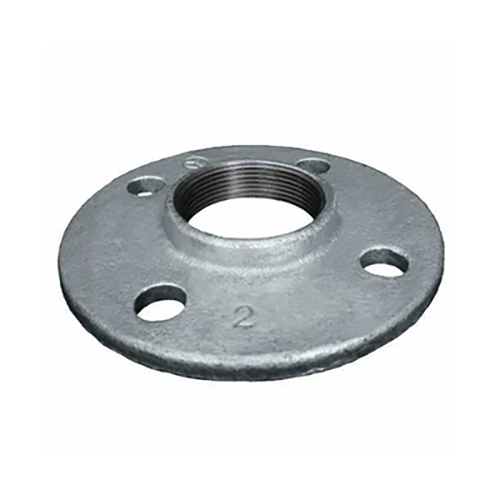
Threaded Flange About
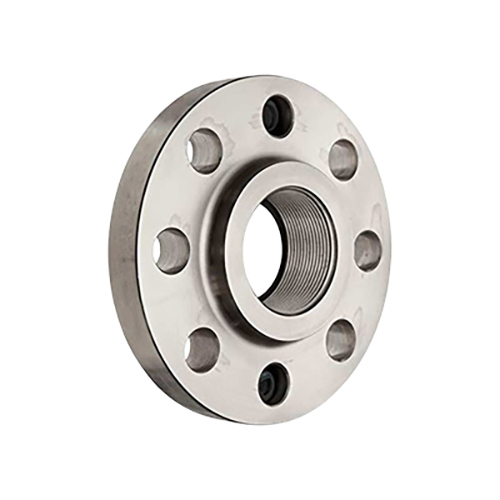
Specifications of Threaded Flanges
- Material: Carbon steel, stainless steel (304, 316, 316L), alloy steel
- Size Range: 1/2 inch to 24 inches
- Pressure Class: Class 150, 300, 600, 900, 1500, and 2500
- Standard Compliance: ASME B16.5, ANSI B16.47
- Thread Type: NPT (National Pipe Thread), BSP (British Standard Pipe), customized options available
- Face Type: Raised Face (RF), Flat Face (FF), Ring Type Joint (RTJ)
- Surface Finish: Polished or as per customer requirements
- Coating: Galvanized, epoxy coating, or painted for corrosion resistance
Versatile Connection Solutions for IndustryOur threaded flanges offer reliable, leak-proof joints for various pipelines and pressure systems. Compatible with multiple threading types and face designs, these flanges are ideal for use in oil & gas, water supply, and chemical industries. Their robust construction, high durability, and precise manufacturing to ANSI, ASME, DIN, and other global standards ensure dependable performance even under demanding temperature and pressure conditions.
Customizable Design and Superior DurabilityChoose from a range of sizes, grades, and surface finishes-including polished and shot-blasted-tailored to your project needs. Every flange is available with corrosion-resistant coatings and can be shipped in sturdy plywood cases, wooden pallets, or custom packaging. The use of quality forgings and meticulous machining delivers a superior product with extended service life and minimal maintenance.
FAQ's of Threaded Flange:
Q: How are threaded flanges with female threaded ends used in pipeline systems?
A: Threaded flanges with female threaded ends are commonly employed to connect pipelines, valves, and equipment in applications where welding is impractical. They provide a secure and leak-proof joint by screwing the male-threaded pipe into the flange, ensuring easy installation and removal.
Q: What are the main benefits of using Raised Face, Flat Face, or RTJ threaded flanges?
A: Raised Face (RF) and Flat Face (FF) flanges offer reliable sealing for a variety of gasket types, while Ring Type Joint (RTJ) flanges provide enhanced sealing capabilities for high-pressure and high-temperature applications. These face types enable selection flexibility based on your operational requirements.
Q: Where can these threaded flanges be applied?
A: These flanges are widely used across industries such as oil & gas, chemical processing, water supply, and general pipeline systems due to their versatility, corrosion resistance, and compliance with global standards.
Q: What manufacturing standards do these flanges conform to?
A: All threaded flanges comply with international standards like ANSI B16.5, ASME B16.5, DIN, EN1092-1, BS, JIS, and GOST, ensuring reliable dimensions, performance, and compatibility for your projects.
Q: How does the manufacturing process ensure quality and durability?
A: Every flange is forged and precisely machined, then heat-treated to achieve the necessary mechanical properties. Strict tolerance controls and optional anti-rust or galvanizing coatings further enhance corrosion resistance and longevity.
Q: When should I opt for stainless steel or alloy steel grades?
A: Stainless steel and alloy steel grades are recommended for environments exposed to corrosive fluids, high temperatures, or where high purity is required, such as chemical plants and offshore platforms. They offer superior corrosion resistance compared to carbon steel flanges.
Q: What packaging options are available for export and handling?
A: Threaded flanges can be supplied in plywood cases, wooden pallets, or customized packaging. This ensures safe transport and handling, maintaining product integrity during transit.

 Send Inquiry



 Send Inquiry

 Send Inquiry