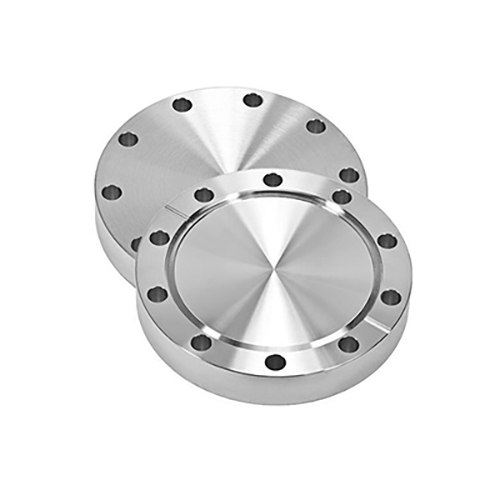
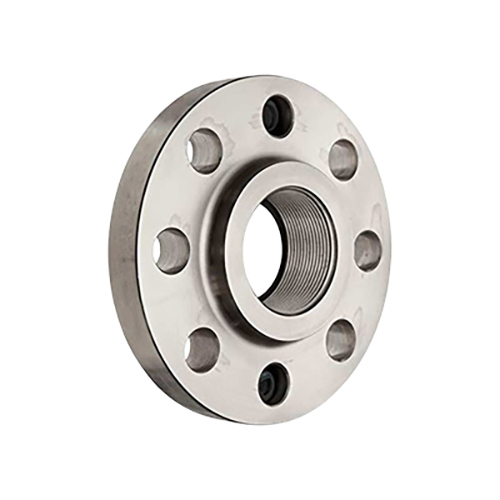
Blind Flanges About
Specifications of Blind Flanges:
- Available in stainless steel, carbon steel, and alloy materials.
- Offered with raised face, RTJ face, or flat face designs.
- Available in multiple sizes and pressure ratings to meet your specific requirements.
Engineered for Durability and SafetyBlind flanges are manufactured through closed die forging, ensuring high structural integrity and performance. They undergo thorough testing, including 100% radiography, hydro, visual, and dimensional inspections. Available coatings such as anti-rust oil, black paint, or galvanizing provide an added layer of corrosion resistance, making them suitable for demanding environments.
Customized to Meet Industry NeedsAvailable in a variety of standards (ANSI, ASME, DIN, JIS, EN, BS) and materials (carbon steel, stainless steel, alloy steel), our blind flanges can be customized in size, coating, and finish. This flexibility ensures compatibility with different piping systems and project requirements across oil & gas, petrochemical, and power plant industries.
FAQ's of Blind Flanges:
Q: How are blind flanges typically used in industrial applications?
A: Blind flanges are used to close off ends of piping systems, pressure vessel openings, or valves, allowing for section isolation during maintenance, pressure testing, or system expansion. Their ability to withstand high pressure and temperature makes them essential in oil & gas, petrochemical, waterworks, and power plant projects.
Q: What materials and grades are available for blind flanges?
A: Blind flanges are manufactured from materials such as carbon steel, stainless steel, and alloy steel. Common grades include ASTM A105, A350 LF2, A182 F304, F316, F11, and F22, among others. Material selection depends on application requirements like temperature, pressure, and corrosion resistance.
Q: When should I choose a specific face type such as Raised Face (RF), Flat Face (FF), or Ring Type Joint (RTJ)?
A: The choice of face type depends on the service conditions and flange compatibility. Raised Face (RF) is common for general industrial applications, Flat Face (FF) is preferred where gasket seating must be uniform, and Ring Type Joint (RTJ) is selected for high-pressure, high-temperature environments requiring a leak-proof seal.
Q: Where can these blind flanges be installed?
A: Our blind flanges can be installed on pipeline ends, pressure vessel nozzles, and valve outlets in locations requiring secure sealing. They conform to various international standards, ensuring global applicability in industries such as oil & gas, petrochemical, and waterworks.
Q: What manufacturing and testing processes are used for these blind flanges?
A: The manufacturing process involves closed die forging, resulting in high strength flanges with precise dimensions. Each flange is subjected to rigorous testing: 100% radiography, hydrostatic pressure testing, and both visual and dimensional inspections, ensuring reliability and safety in service.
Q: How does coating enhance the performance of blind flanges?
A: Coatings like anti-rust oil, black paint, or galvanizing are applied to protect the flange surface from corrosion. This prolongs service life, especially in harsh or corrosive environments, and maintains the reliability of the flange where safety and longevity are paramount.
Q: What are the benefits of choosing a customized blind flange?
A: Custom blind flanges allow for precise matching to system dimensions, material, and pressure requirements. This reduces the risk of leakage or failure, enhances operational safety, and ensures seamless integration with existing infrastructure, supporting efficient and cost-effective maintenance or expansion.

 Send Inquiry



 Send Inquiry

 Send Inquiry