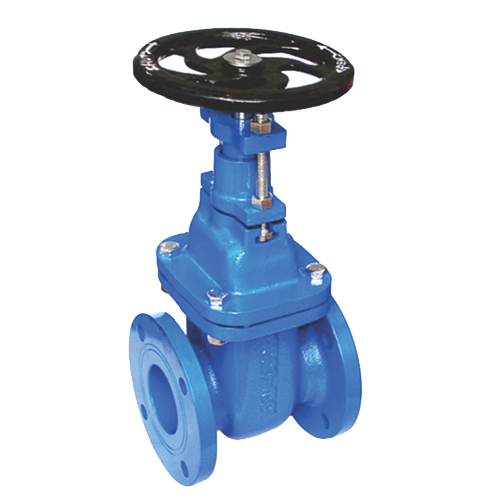
CI Gate Valve About
Product Features
- Generally in non rising stem design
- Available in outside yoke type rising stem
- Flanged ends
- Handwheel, cap or gear operated
- Available in PN10 & PN16
- ISI Marked as per IS:14846
- Available in CL125 as per BS:5163
- Available in reselient seating as well as metal seating
Working & Test Pressure :
- Sluice Valve PN 1.0 Sluice Valve PN 1.0 Gate Valve CI 150
- Hydrostatic Test (Mpa) Body / Shell 1.5, 2.4, 3.0
- Hydrostatic Test (Mpa) Seat 1.0, 1.6, 2.2
- Pneumatic Test (Mpa) Seat NA, NA, 0.7
1 Bar = 0.1 Mpa = 1.019 Kg.cm2 = 14.50 PSI
Application
Water, Oil, Air, Fire fighting applications, Marine application.
Exceptional Durability and VersatilityEngineered to deliver outstanding performance, this gate valve is constructed from high-grade cast iron with stainless steel or carbon steel stems. Designed for a wide temperature range from -10C to 200C and pressure ratings of PN 1.6 MPa (Class 150), it ensures a tight shutoff and low operating torque. The valve's flexible mounting orientation (horizontal or vertical) enables versatile installation, making it highly suitable for diverse industrial and commercial systems.
Reliable Sealing and Control OptionsChoose from rubber or metal-to-metal sealing and seat ring materials like bronze, gunmetal, or cast iron, ensuring excellent shutoff performance and longevity. Operating mechanisms range from traditional handwheel to optional actuators, accommodating varied application requirements. The outside or inside screw designs, bolted bonnet construction, and multiple flanged or screwed end connections provide maximum adaptability for efficient pipeline integration.
FAQ's of CI Gate Valve:
Q: How does the CI Gate Valve ensure a tight shutoff and low leakage in industrial applications?
A: The valve utilizes solid or flexible wedge discs along with rubber or metal-to-metal sealing and seat rings made of bronze, gunmetal, or cast iron. This combination provides a durable barrier against leakage, ensuring a reliable and tight shutoff even under fluctuating pressure and temperature conditions.
Q: What are the installation guidelines for the CI Gate Valve regarding orientation and mounting?
A: This valve is designed for both horizontal and vertical mounting, providing installation flexibility across various pipeline arrangements. Flanged or screwed end connections, compliant with BS:4504 or IS:1538, allow secure and standardized integration into new or existing pipelines.
Q: When should I select the rising stem versus the non-rising stem design?
A: A rising stem design is recommended when visual position indication of the valve is critical, such as for isolation in fire protection systems. Non-rising stem types save space and are ideal for buried or limited-clearance installations, commonly used in water distribution or HVAC systems.
Q: Where can this valve be used, and which media is it compatible with?
A: The CI Gate Valve is suitable for a broad range of fluids, including water, oil, gas, steam, and air. It is commonly applied in industrial pipelines, fire protection systems, irrigation networks, HVAC setups, and power plant circuits across commercial, municipal, and industrial sectors.
Q: What is the valve's process for ensuring corrosion resistance and longevity?
A: The body and bonnet are coated with either epoxy paint or bitumen, creating a robust protective barrier against corrosion. The use of cast iron, stainless or carbon steel stems, and graphite or PTFE gland packing further enhance the valve's operational life in demanding environments.
Q: How is the CI Gate Valve operated, and can it be automated for remote use?
A: Standard operation is by handwheel, providing precise manual control. For automated or remote applications, an actuator can be optionally installed, allowing for integration into control systems or motorized operation, enhancing ease of use and safety in complex installations.
Q: What benefits does this CI Gate Valve offer over alternatives for industrial and commercial applications?
A: It offers a full port design for minimal pressure loss, high corrosion resistance, customizable sealing and control options, and reliable, tight shutoff. Compliance with international standards ensures quality and safety, while the wide material and configuration choices support a broad range of application needs.

 Send Inquiry


 Send Inquiry

 Send Inquiry